How to Choose a Country Stamp Album That Fits
A country collection can outgrow its first album faster than expected. One year you may be filling spaces for modern commemoratives; the next, you may acquire an inherited group of older issues, souvenir sheets, or stamps from a territory that later became independent. Knowing how to choose a country stamp album begins with a simple decision: are you building a collection for easy browsing, for completeness, or for long-term preservation? The right answer determines the pages, binder, mounting method, and room you will need.
Start with the collection you actually have
Before choosing an album, sort through your stamps by country and approximate time period. Look for the material that creates the most pressure on the system: larger-format stamps, miniature sheets, blocks, covers, or a substantial group of early issues. An album that works beautifully for a small modern collection may not accommodate these items without separate pages or storage.
Also decide whether one country deserves its own album. A dedicated country album is usually the best choice when you actively collect a nation with a long postal history, such as the United States, Great Britain, Germany, France, or Canada. Country-specific pages provide printed spaces, issue descriptions, and a logical chronological framework. They make it easier to see what is present and what is missing without trying to design every page yourself.
For a smaller collection, a stockbook or blank-page album may be more sensible. This is especially true if you collect a country by theme, prefer selected examples rather than every issue, or have not yet decided how far back you want to collect. Do not buy a large, highly specialized album simply because it looks complete if its scope does not match your collecting plan.
Choose pages before you choose the binder
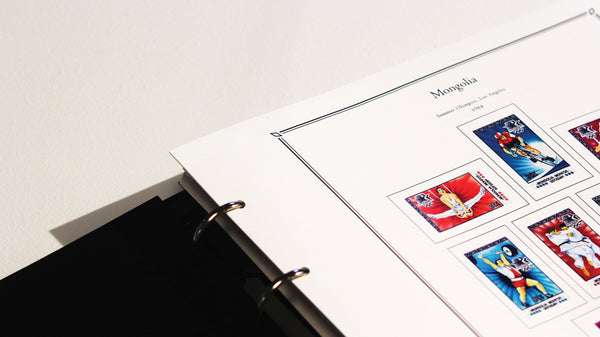
The pages are where your stamps live, so page style should lead the decision. Printed pages are ideal for collectors who appreciate a guided layout. They establish the order of issues and give a collection a finished appearance as spaces are filled. With country-specific pages, check the coverage carefully. Some albums begin at a particular year, while others include classic issues, occupation periods, colonies, territories, or related postal entities.
This distinction matters. A collector of Great Britain may want spaces for regional issues and dependencies, while another may only want stamps issued by the United Kingdom. A Germany collector may need pages that address the German states, reunification, and the different postwar administrations. The more historically complex the country, the more valuable it is to understand exactly what the album treats as part of the collection.
Hingeless pages offer the cleanest presentation and strong protection for mint stamps. Each stamp is placed in a clear protective mount already affixed to the page, avoiding the need for a hinge on the stamp itself. They are a popular choice for collectors who value condition and a polished display. The trade-off is cost: hingeless albums are generally more expensive, and their printed spaces are less flexible if you collect varieties, duplicates, plate blocks, or material outside the standard layout.
Regular printed pages are more adaptable. You can use quality stamp hinges for used stamps, or add individual mounts for mint stamps and higher-value pieces. This approach costs less initially and lets you choose mount sizes as needed. It does require more hands-on work, particularly when cutting and positioning mounts. For many collectors, that careful placement is part of the pleasure.
Blank album pages give you the most freedom. They are useful for specialized collections, unusual country groupings, postal history, revenues, or stamps that do not fit a standard catalog sequence. The result can be highly personal, but it takes planning. If visual consistency and ready-made organization matter most, country-specific printed pages are the easier route.
How to choose a country stamp album binder system
A good page set needs a compatible binder. This sounds obvious, but mismatched formats are among the most frustrating album purchases. Confirm the page size, hole pattern, and binding style before adding pages or supplements.
Post binders hold pages firmly between covers with posts or screws. They create a formal, book-like appearance and keep the page stack secure. Because pages are held tightly, they are an excellent option for a collection that will remain largely stable. Adding pages can take more effort, however, since the binder must be opened and the posts adjusted.
Ring binders are easier to expand and rearrange. They suit collectors who add annual supplements, reorganize sections, or build a collection over time. A well-made ring binder should support pages without allowing them to sag, and its rings should close cleanly so pages are not damaged during turning. For active collections, that flexibility often outweighs the more traditional appearance of a post-bound album.
When comparing systems, think beyond the first binder. Will the same manufacturer offer future supplements? Can you obtain replacement pages, matching binders, and slipcases later? A country album is not a one-time purchase when you collect current issues. Choosing an established system makes it far easier to keep the collection consistent five or ten years from now.
Plan for growth, not just today's stamps
A complete album can be tempting, but a collection needs breathing room. If you expect to add new annual issues, choose a binder with enough capacity for supplements or plan on a second volume. Trying to force too many pages into a binder can stress the binding, make pages difficult to turn, and create uneven pressure on stamps and mounts.
Growth also affects the level of coverage you choose. Some collectors want every major catalog number, while others want a representative collection with strong designs and historical interest. Neither approach is less legitimate. The key is to buy pages that support your goal rather than pages that quietly pressure you to pursue issues you do not want.
Be realistic about specialized material as well. Souvenir sheets, booklets, first-day covers, and mint sheets often require different storage than standard album pages. They may belong in protective sleeves, dedicated cover albums, or mint-sheet formats. Keeping these items in the right system protects them and prevents the country album from becoming overfilled.
Protect condition from the beginning
Albums should help preserve stamps, not merely display them. Choose acid-free, archival-quality pages and materials designed for philatelic use. Avoid pressure-sensitive photo corners, ordinary office tape, and low-grade plastic sleeves that may discolor or adhere to stamps over time.
Use stamp tongs rather than fingers whenever possible, particularly with mint stamps. Natural oils and moisture can mark gum or leave fingerprints on glossy surfaces. If you mount stamps yourself, select mounts that leave a small margin around the stamp rather than forcing it into an undersized pocket. A mount that is too tight can curl corners or make removal difficult.
Storage conditions matter as much as the album. Keep albums upright, supported, and away from direct sunlight, basements, attics, and exterior walls where temperature and humidity fluctuate. A protective slipcase can reduce dust and light exposure while giving a shelf of albums a more orderly appearance.
Match the system to your collecting style
The best album is not automatically the most elaborate one. A newer collector might begin with regular pages and a flexible ring binder, then move into a dedicated hingeless country album once collecting priorities become clear. A legacy collection may call for a more careful decision: preserve the original arrangement if it has historical or personal value, or transfer the stamps gradually into a modern archival system if the old pages are brittle, acidic, or overcrowded.
Experienced collectors often benefit from consistency. If several countries are already housed in a particular format, selecting compatible albums for new countries creates a more unified library and simplifies future supplements. Palo Albums carries established systems from Palo, Lindner, and Davo, each with its own page styles and binder formats, so compatibility should always be considered at the beginning rather than after pages have accumulated.
A country stamp album should make you want to return to the collection. Choose the coverage that reflects your interests, the page style that respects your stamps, and the binder system that can grow at your pace. Then leave a little room for the unexpected discovery - it is often the next stamp that gives an album its real purpose.
Leave a comment
Comments will be approved before showing up.
Also in News

Choosing the Best Stamp Album for Beginners
A Quality Collection