Choosing the Best Stamp Album for Beginners
A first album makes a quiet but lasting decision for your collection: whether each stamp will have a clear home, proper protection, and room to grow. The best stamp album for beginners is not automatically the largest or most expensive one. It is the system that matches what you collect now, protects the stamps you care about, and will still make sense when your collection becomes more focused.
A beginner can enjoy stamps in a basic stockbook, a worldwide album, or a detailed country album. Each serves a different purpose. Choosing well at the start helps prevent a familiar problem: a collection spread across loose packets, duplicate pages, mismatched binders, and albums that no longer fit the way you collect.
Start With What You Want to Collect
Before choosing pages or a binder, consider the scope of your collection. Are you drawn to stamps from one country, a particular topic such as birds or railroads, or a broad worldwide assortment? The answer matters more than the number of stamps currently in your possession.
A worldwide collector often benefits from a general album or stockbook at first. A worldwide printed album provides labeled spaces for many countries and encourages exploration. Its trade-off is that spaces may be limited, especially for specialized issues, varieties, or extensive modern material. It is a good introduction to geography and stamp design, but it may not become a permanent home for a growing country collection.
If one country already holds your attention, a country-specific album is usually the better long-term choice. These pages follow a defined catalog order and provide an organized place for issues from that country. They also make it easier to see what is missing. A collector focused on United States, Great Britain, Germany, or another established collecting area will generally appreciate this structure sooner rather than later.
Thematic collectors have more flexibility. A stockbook can be an excellent starting point while the topic takes shape. Once you know whether your collection will include every possible butterfly stamp or only selected examples, you can decide whether custom pages or a more formal album system is warranted.
The Best Stamp Album for Beginners Depends on Page Style
The central choice is often between regular printed pages, hingeless pages, and stock pages. None is universally right. The best option depends on your stamps, your budget, and the experience you want from the hobby.
Regular pages and stamp hinges
Regular album pages have printed spaces where stamps are attached with stamp hinges. A hinge is a small, folded piece of gummed paper that attaches the stamp to the page. This traditional method is economical and gives a collection a classic appearance.
For used stamps, hinges can be an entirely practical choice. Many collectors enjoy the direct process of mounting and arranging their stamps, and regular pages make it easy to begin with a modest investment. However, beginners should understand the trade-off. Applying a hinge can affect the gum on an unused stamp, and poorly applied hinges can be difficult to remove. Never use ordinary glue, tape, or self-adhesive office products in an album.
Hingeless pages
Hingeless pages use clear protective mounts that are already attached to the page. The stamp slips into the mount without adhesive touching the stamp itself. This is often the preferred format for mint stamps, better-condition material, and collectors who want a polished presentation from the start.
Hingeless albums cost more than regular-page albums, but the added protection and clean appearance can be worthwhile. The main consideration is flexibility. Preprinted hingeless pages are designed for specific issues and positions, so they work best when you are following the country or topic covered by the album. They are less suited to an assortment that changes direction every few months.
Stock pages and stockbooks
Stock pages hold stamps behind clear strips, allowing you to move items without hinges or individual mounts. They are useful for duplicates, identification, temporary sorting, and collections that are still evolving. A quality stockbook with properly made strips can also serve as a permanent display format for many collectors.
For a beginner, stock pages offer a forgiving way to learn. You can rearrange stamps as you discover new interests, separate damaged examples from upgrades, and group material by country or theme without committing to printed spaces. They do not provide the same issue-by-issue roadmap as a country album, but that can be an advantage while you are deciding what you want to collect.
Choose a Binder System You Can Continue to Build
The pages are only half the system. The binder determines how securely those pages are held and how easily the collection can expand.
Ring binders are familiar and flexible. They make it simple to add, remove, or reorganize pages. For stock pages, reference material, and early collecting stages, this convenience is valuable. Make sure the pages are punched for the correct ring spacing and that the binder closes cleanly without stressing the page edges.
Post binders use screw posts to secure pages in a more uniform stack. They are commonly associated with formal album systems and create an attractive, book-like result. Adding pages requires more effort than with rings, but the finished album can lie flatter and present pages more neatly. If you expect to build a dedicated country collection over many years, a post-bound system is worth considering.
Proprietary binder systems require special attention. A page made for one brand or binder mechanism may not fit another, even when the overall page size looks similar. Before purchasing supplements or replacement pages, confirm the page format, hole pattern, binder type, and series. This small check prevents one of the most frustrating collecting mistakes: buying quality pages that cannot be used in your existing album.
Established European systems from brands such as Palo, Lindner, and Davo are designed around compatible components, including binders, pages, supplements, and protective accessories. That consistency is valuable when you want a collection that can expand in an orderly way rather than becoming a mix of unrelated formats.
Do Not Overlook Preservation Quality
An album should display stamps, but its first responsibility is to protect them. Cheap paper, acidic materials, sticky plastics, and overcrowded pages can cause damage that is difficult or impossible to correct.
Look for album pages made with archival-quality, acid-free paper and mounts or stock strips that are free from harmful plasticizers. Stamps should slide into mounts without force. If a stamp is difficult to insert, do not bend it or push it down with your fingers. Use stamp tongs and check that the mount is the correct size.
Store albums upright on a shelf, supported so they do not lean heavily. Keep them away from basements, attics, direct sunlight, and areas with large swings in temperature or humidity. A beautiful binder cannot compensate for a damp storage environment. Moisture can lead to toning, mold, warped pages, and stamps stuck in their mounts.
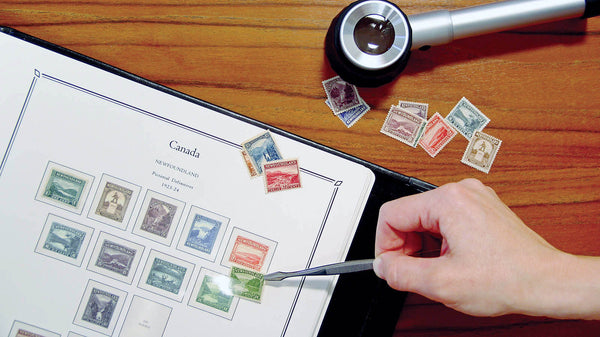
Handle stamps with tongs rather than fingertips whenever possible. Natural skin oils can mark the paper or gum, particularly on mint stamps. A basic pair of tongs and a magnifier are small purchases that quickly become part of good collecting habits.
A Practical First Setup
For many new collectors, the most sensible first setup is not one large album filled immediately. Start with a quality stockbook or stock pages for sorting, plus an album system suited to the area you expect to develop. The stockbook gives incoming stamps, duplicates, and unidentified items a safe temporary home. The album becomes the place for stamps you have selected, identified, and want to keep as part of the collection.
If your interest is broad, begin with a worldwide album or a stockbook and allow your preferences to emerge. If you know you want to collect a single country, choose a country-specific album with room for future supplements. If your budget is limited, regular pages and careful use of hinges can be a sound entry point. If mint condition and presentation are priorities, hingeless pages are often the better investment.
Avoid buying an album solely because it is marketed as complete. A nearly complete page set may cover more territory than you intend to collect, while an album with expansion options can remain useful for decades. Likewise, do not assume a bigger binder is better. A binder that is overfilled becomes harder to handle and can put pressure on pages and stamps.
The right first album should make you want to open it, study the spaces, and place the next stamp with care. Leave room for your collecting interests to change. A well-chosen system does not rush the hobby - it gives your collection a dependable place to become your own.
Leave a comment
Comments will be approved before showing up.
Also in News
A Quality Collection
Selecting an Album