Hingeless vs Hinged Stamp Pages Compared
A stamp album page does more than show where a stamp belongs. It determines how the stamp is handled, how easily the collection can grow, and what the finished album looks like decades from now. The choice between hingeless vs hinged stamp pages is therefore not simply a matter of appearance. It is a decision about preservation, budget, collecting style, and the material you collect.
For some collectors, a traditional hinged page is part of the hobby's history and offers welcome flexibility. For others, especially those building mint country collections or refining a long-held album, hingeless pages offer a cleaner and more protective presentation. Neither format is automatically right for every collection.
Hingeless vs Hinged Stamp Pages: The Basic Difference
Hinged pages are printed album pages on which stamps are attached individually with stamp hinges. A hinge is a small, folded piece of gummed paper. One side adheres to the back of the stamp and the other to the page, allowing the stamp to sit in its designated space.
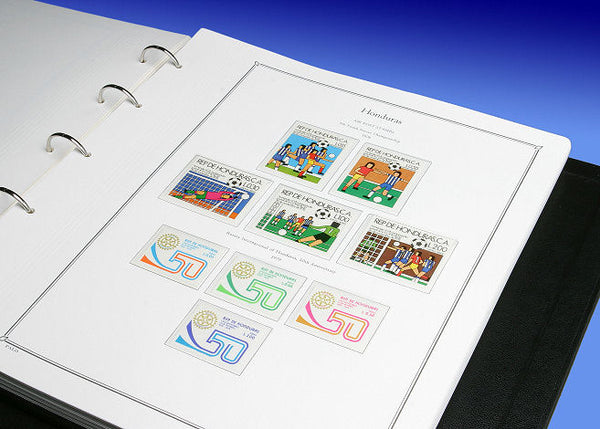
Hingeless pages have transparent mount strips already attached to the page. The collector slides the stamp into the appropriate mount, rather than adhering anything directly to its reverse. Good hingeless systems are designed to provide a consistent, orderly display while avoiding direct gum contact.
This difference changes the entire experience of mounting a collection. With hinges, placement is entirely in your hands. With hingeless pages, the placement, spacing, and visual rhythm have largely been established for you.
When Hinged Pages Make Sense
Traditional pages and hinges remain a sensible choice for many collectors. They are often less expensive to buy initially, and they are especially practical when a collection is incomplete, evolving, or built from a wide range of stamp sizes and issues.
A hinged page can also be easier to adapt. If a stamp has been identified incorrectly, upgraded, or moved to another specialty album, it can usually be repositioned with relatively little trouble. Collectors who create their own layouts often appreciate that freedom. There is no pre-cut mount to outgrow when a variety, label, or additional item needs room.
Used stamps are frequently good candidates for hinges. Since the original gum is no longer a concern on most used stamps, collectors may reasonably prioritize a traditional presentation and lower cost. Many older collections were assembled this way, and a carefully hinged used collection can still be attractive, organized, and historically appropriate.
The trade-off is that hinges can affect a stamp. A hinge may leave a mark, thin the paper if removed carelessly, or disturb original gum. Modern peelable hinges are gentler than older varieties, but they do not make a mint stamp completely untouched. For stamps valued for pristine, never-hinged gum, that distinction matters.
Why Collectors Choose Hingeless Pages
Hingeless pages appeal to collectors who want a refined finished album with minimal handling of the stamp itself. The stamp is placed in a protective mount, and the mount is already aligned with the printed space. The result is usually a clean, uniform look that allows the artwork and design of the page to do their work.
For mint stamps, hingeless pages are often the preferred choice. Original gum remains free from hinge adhesion, and the stamp can be removed from the mount without peeling anything from its back. This is especially useful for modern issues, commemorative sets, and collections in which condition and gum status are important.
Hingeless pages also save time during mounting. Instead of moistening, positioning, and waiting for individual hinges to settle, the collector simply slides each stamp into place. That can make a meaningful difference when organizing a large group of stamps or installing an annual supplement.
There is a visual benefit as well. Preprinted hingeless pages tend to make a collection look finished even while spaces remain empty. The transparent strips frame the stamp consistently, while the page text provides context for issue dates, denominations, and series. For collectors building a country collection over many years, that structure is part of the satisfaction.
Consider the Costs Beyond the First Album
Hingeless pages generally cost more than comparable pages intended for hinges. The added expense reflects the mounted strips and the labor involved in preparing them. A collector starting a large country collection should account not only for the first album, but also for future supplements and any related binder or page system required.
That higher cost can be worthwhile when it supports the type of collection you want to build. If you regularly purchase mint sets or prefer to preserve stamps in the best practical condition, hingeless pages may prevent later regret. Re-mounting a collection after years of using hinges can be expensive and time-consuming.
On the other hand, do not assume a more costly page is necessary for every stamp. A broad used worldwide collection, duplicates book, topical working album, or beginner collection may be better served by conventional pages, stock pages, or a combination of methods. The best system is the one you will use consistently and enjoy maintaining.
Appearance, Flexibility, and Collection Style
Which do you choose if both formats are available for your country? Start with the material, then think about how fixed your collection needs to be.
Hingeless pages are best suited to a defined collecting path. For example, a collector assembling one country's regular issues in a branded, year-by-year album will benefit from the precision of printed spaces and preattached mounts. They are also ideal when the album itself is intended to be a display piece or an heirloom collection.
Hinged pages are more flexible when you collect varieties, postal history, revenues, cinderellas, or items that do not fit a standard illustrated layout. They are also useful for collectors who enjoy arranging stamps by theme, color, subject, or period rather than following a catalog sequence.
A mixed approach can work well, provided it is intentional. You might use hingeless country pages for mint definitive and commemorative issues, then use compatible blank pages or stock pages for covers, varieties, and duplicates. The important point is to avoid forcing material into a format that does not suit it.
A Note on Mounts and Stamp Thickness
Not every stamp fits every mount equally well. Stamps with heavy paper, embossed details, attached labels, or unusual shapes need enough room to slide in without pressure. If a preattached mount is too narrow, do not force the stamp. Bending corners or scraping perforations to make an item fit defeats the purpose of protective storage.
Collectors who mount their own material can select mount height and width more precisely. This offers some of the protection of a hingeless presentation while retaining flexibility, though it requires careful measuring and trimming. Black-backed mounts can give lighter stamps stronger visual definition, while clear mounts may better suit pages where the printed design should remain visible.
Check Compatibility Before Adding Pages
Album systems are not universally interchangeable. Before ordering pages or supplements, confirm the country, page format, page size, binder style, and publishing period. Two albums for the same country may use different page dimensions, punch patterns, or page designs depending on the brand and edition.
This is especially important for established collections. A supplement that is technically for the right country may still look out of place or fail to fit if it was made for a different binder system. Matching the existing format protects the visual continuity of the album and avoids wasted purchases.
If you inherited an album, look for the brand name, country title, binder mechanism, and date range printed on the pages or cover. A few details can make it much easier to determine whether your collection needs regular pages, hingeless supplements, replacement mounts, or a different storage approach.
Handling Practices Matter in Either Format
The page format does not replace careful handling. Use stamp tongs rather than fingers whenever possible, especially with mint stamps. Keep pages away from food, drinks, direct sunlight, and damp storage areas. An album should be stored upright with enough support to prevent pages from bowing, but not packed so tightly that binder pressure bends the contents.
For hinged collections, use quality peelable hinges and apply them sparingly. For hingeless pages, insert stamps gently and make sure the mount opening is clear before sliding the stamp inside. In both cases, examine new acquisitions before mounting them. A stamp with active residue, moisture, or a damaged back should not be placed immediately beside your better material.
A well-organized album should make you want to return to the collection. Whether that means the traditional character of hinged pages or the polished protection of hingeless pages, choose the format that respects your stamps and leaves room for the way your collection will grow.
Leave a comment
Comments will be approved before showing up.
Also in News

How to Choose a Country Stamp Album That Fits
Learn how to choose a country stamp album by matching pages, binders, mounts, and expansion plans to the stamps you collect and protect for years ahead.

Choosing the Best Stamp Album for Beginners